
The Sourdough Paradox
Outsource the kneading and you forget the bread. On what to delegate to machines, and what to keep in your hands.
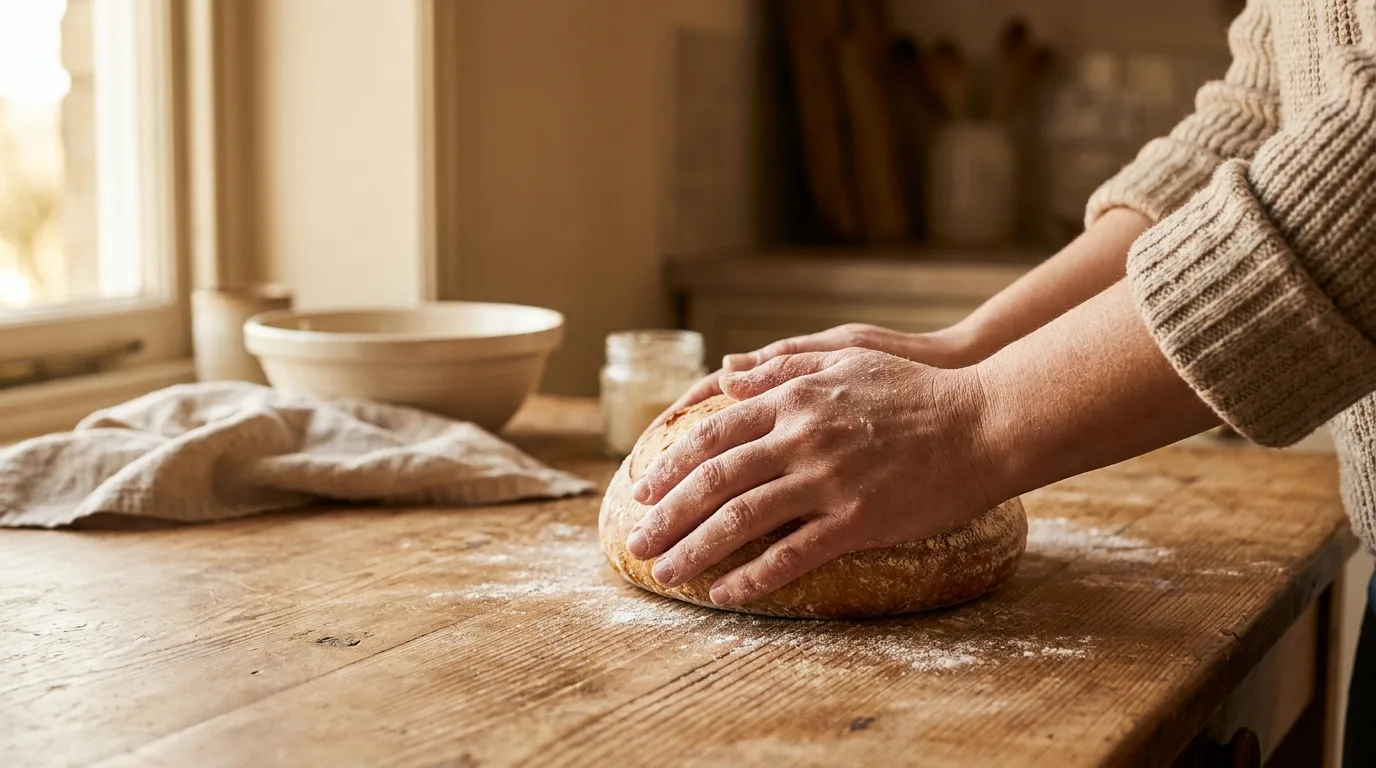
During the first lockdown I baked sourdough, like half of Berlin. Mine was bad. Then it was decent. Somewhere around the twentieth loaf, my hands knew things my head could not explain: when the dough had been worked enough, when it needed rest, when the gluten would hold. None of that came from the recipe. It came from the kneading.
There is a machine for kneading. Every serious baker owns one. And every serious baker will tell you the same strange thing: buy it too early and you never learn what dough should feel like. Buy it after your hands know, and it gives you back an hour of your life with nothing lost.
That is the paradox, and it has followed me into every AI conversation of the past three years.
Outsource the kneading and you forget the bread.
I watch organisations hand entire capabilities to machines in their first month. Teams that let AI draft the strategy before anyone in the room has formed a view. Analysts who paste in numbers they have never sat with. The output looks fine. That is the trap. "Fine" is what incompetence looks like when a machine is covering for it.
The mistake is treating delegation as a single question: can the machine do this? It can, usually. The better question has two parts. Have I done this enough times to judge the result? And if I stop doing it, does my judgment decay or stay intact?
Kneading, it turns out, is in the second category for an experienced baker and the first for a beginner. The same task. Different answer, depending on who is holding the dough.
In our labs we enforce this the unglamorous way: everyone builds the first version by hand, once. In one session, a controller insisted on writing her first automation herself, step by step, while the person next to her generated his in forty seconds. Her version was worse. Two months later she was the one extending the workflow, catching its errors, and teaching it to her team. He was still pasting.
The struggle was not waste. The struggle was the curriculum.
So: delegate freely everything your hands already know. Guard the first twenty loaves of anything new, especially problem framing and quality judgment, because those two never stop paying rent. And when a machine offers to take the learning itself off your plate, decline politely.
Buy the kneading machine. Just make sure your hands know what dough should feel like first.